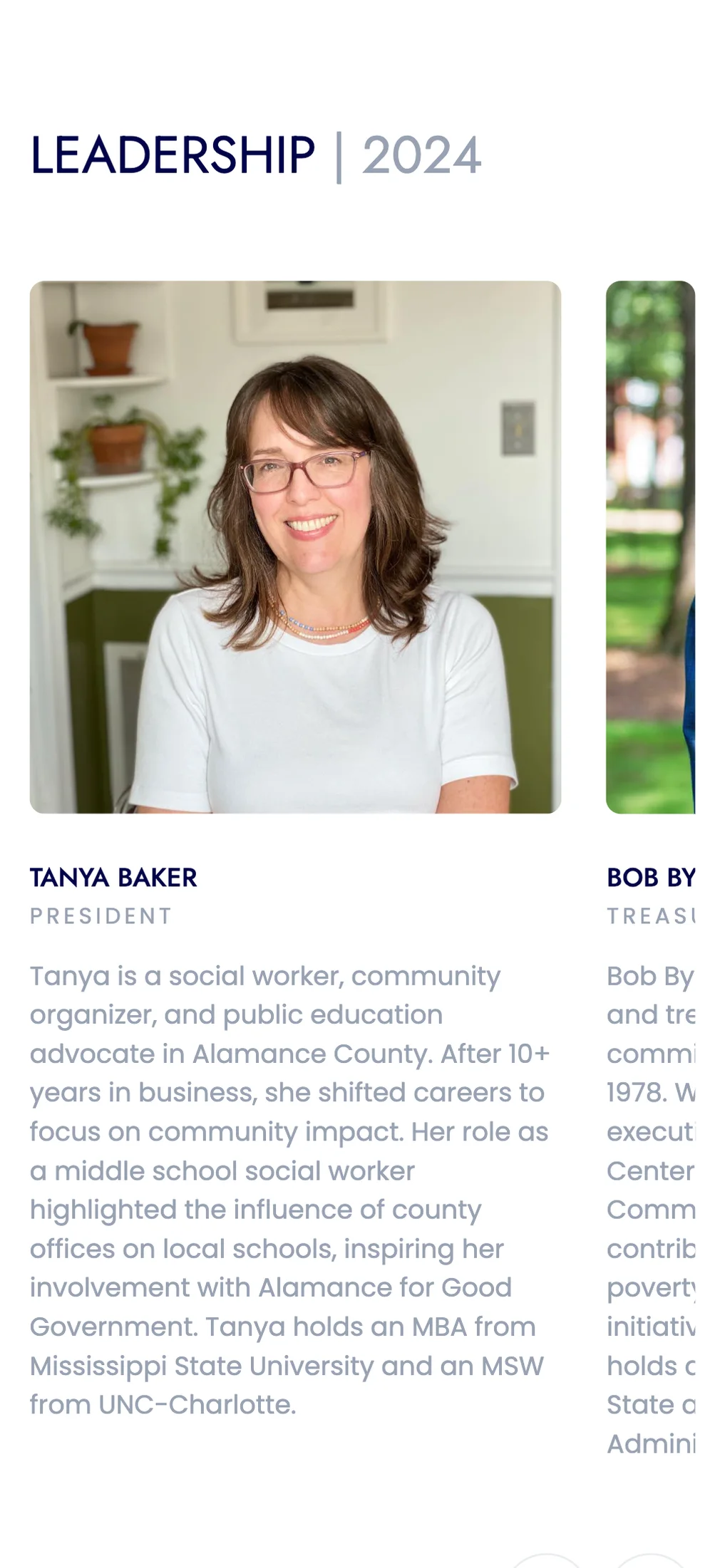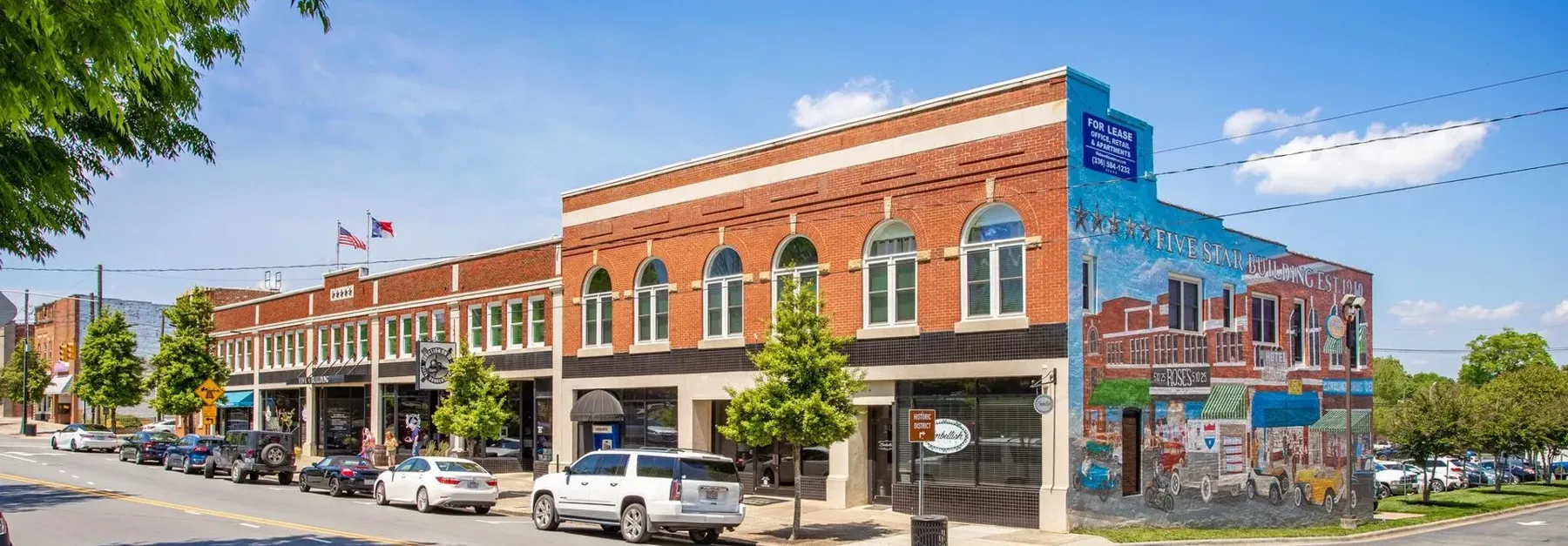
Making the case for district voting.

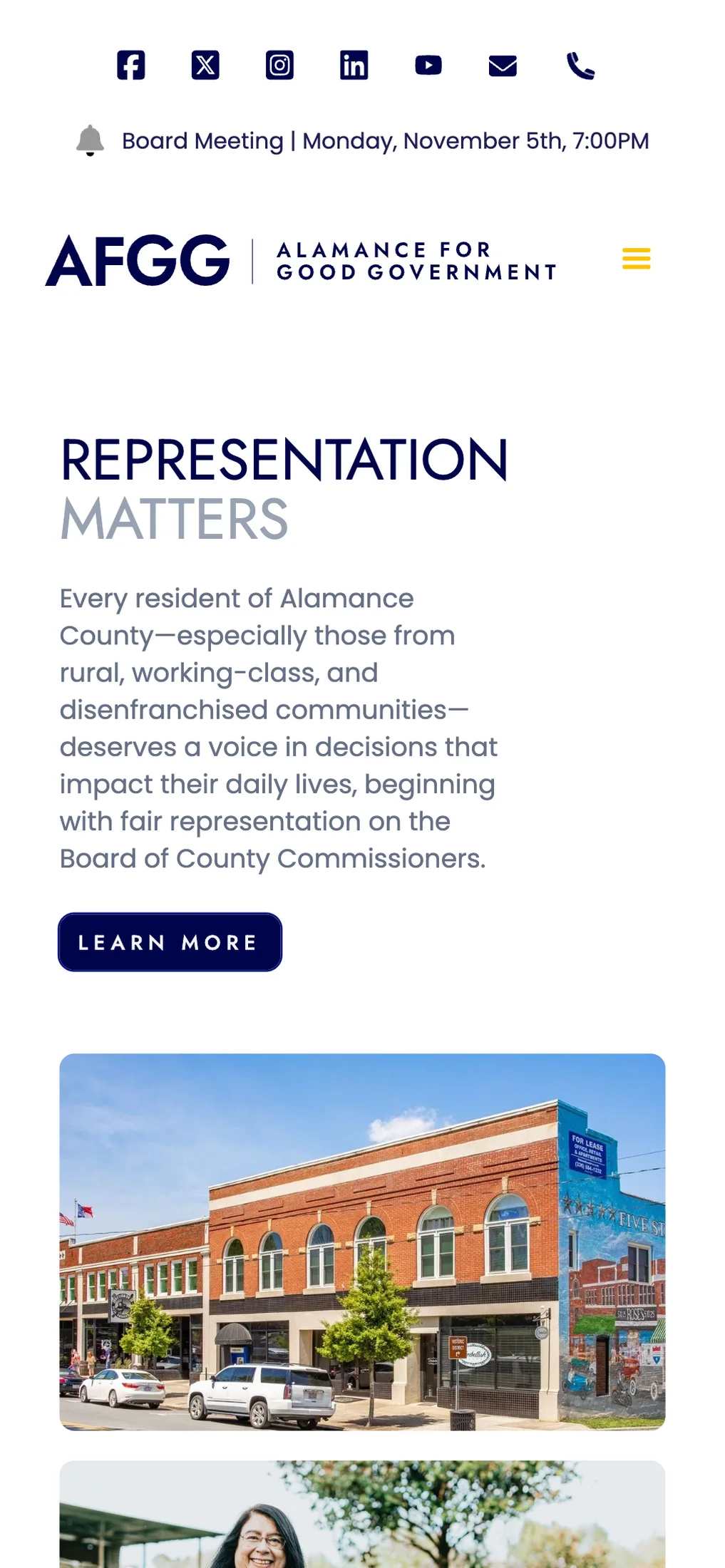
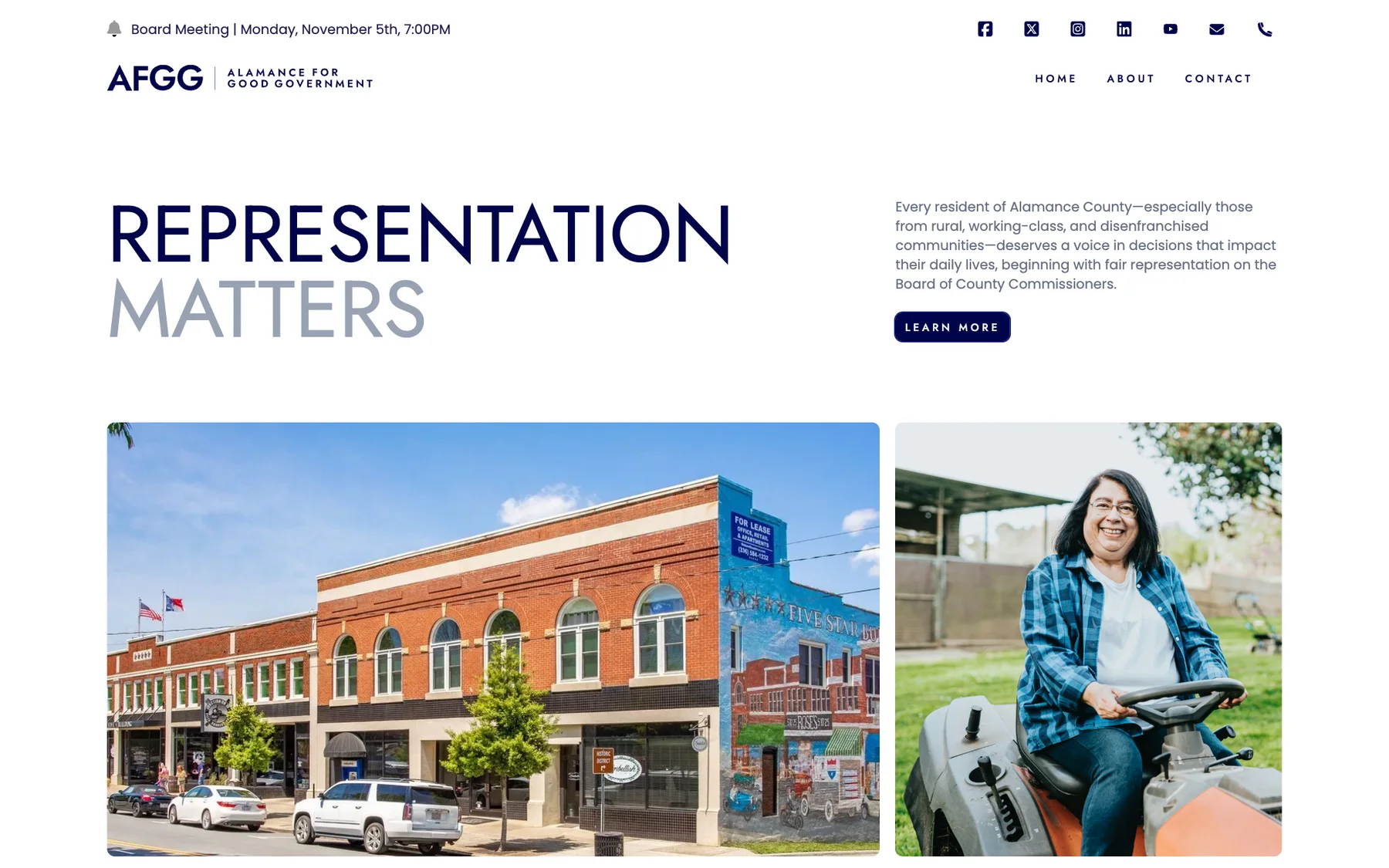
Alamance for Good Government advocates for electing Alamance County’s commissioners by district instead of at-large. We designed and built its website.
An argument most voters don’t know they need to hear.
Alamance County elects all five of its commissioners at-large, so every voter votes for every seat. Most residents have never thought about how their commissioners get elected, and plenty couldn’t name one. Before AFGG can argue for district voting, it has to explain what at-large voting is in the first place.
Showing the problem instead of describing it
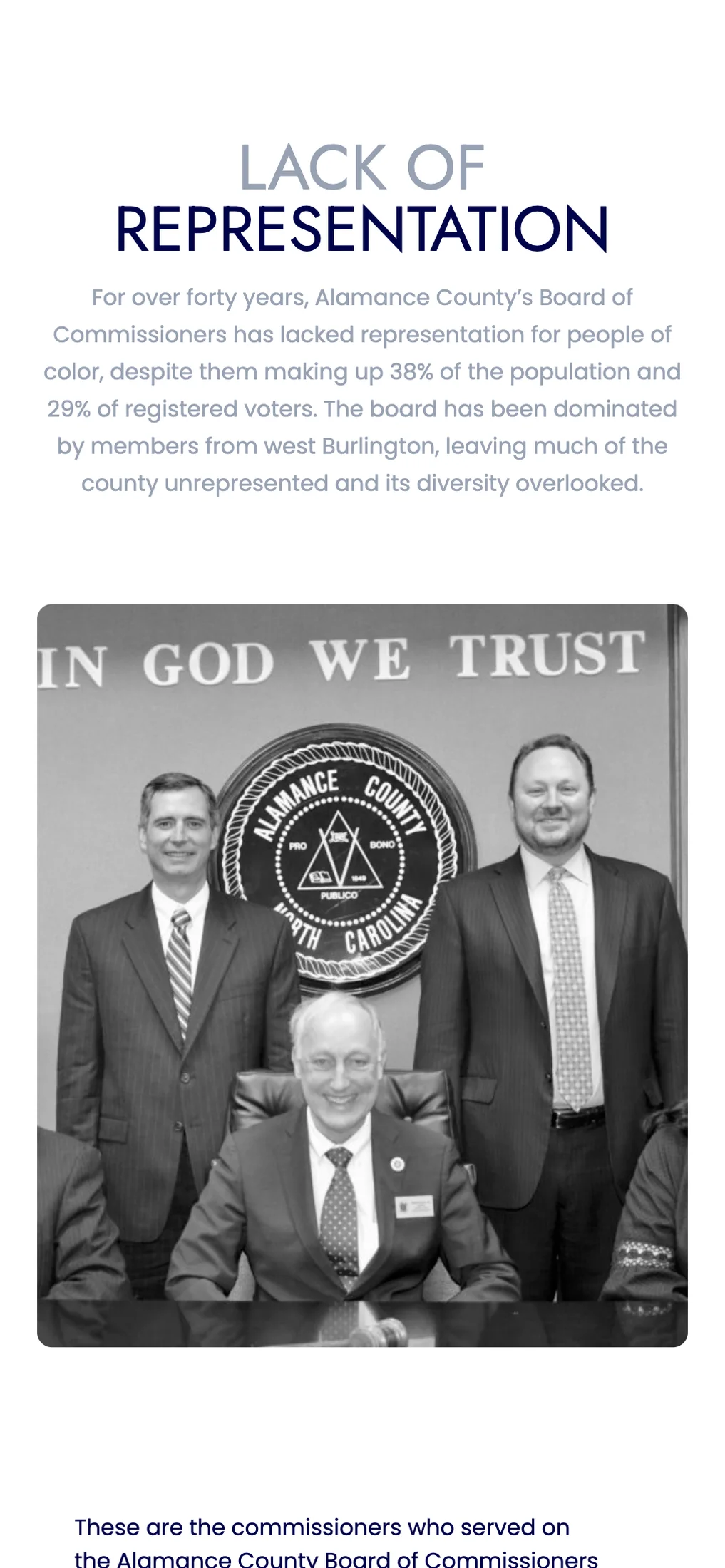
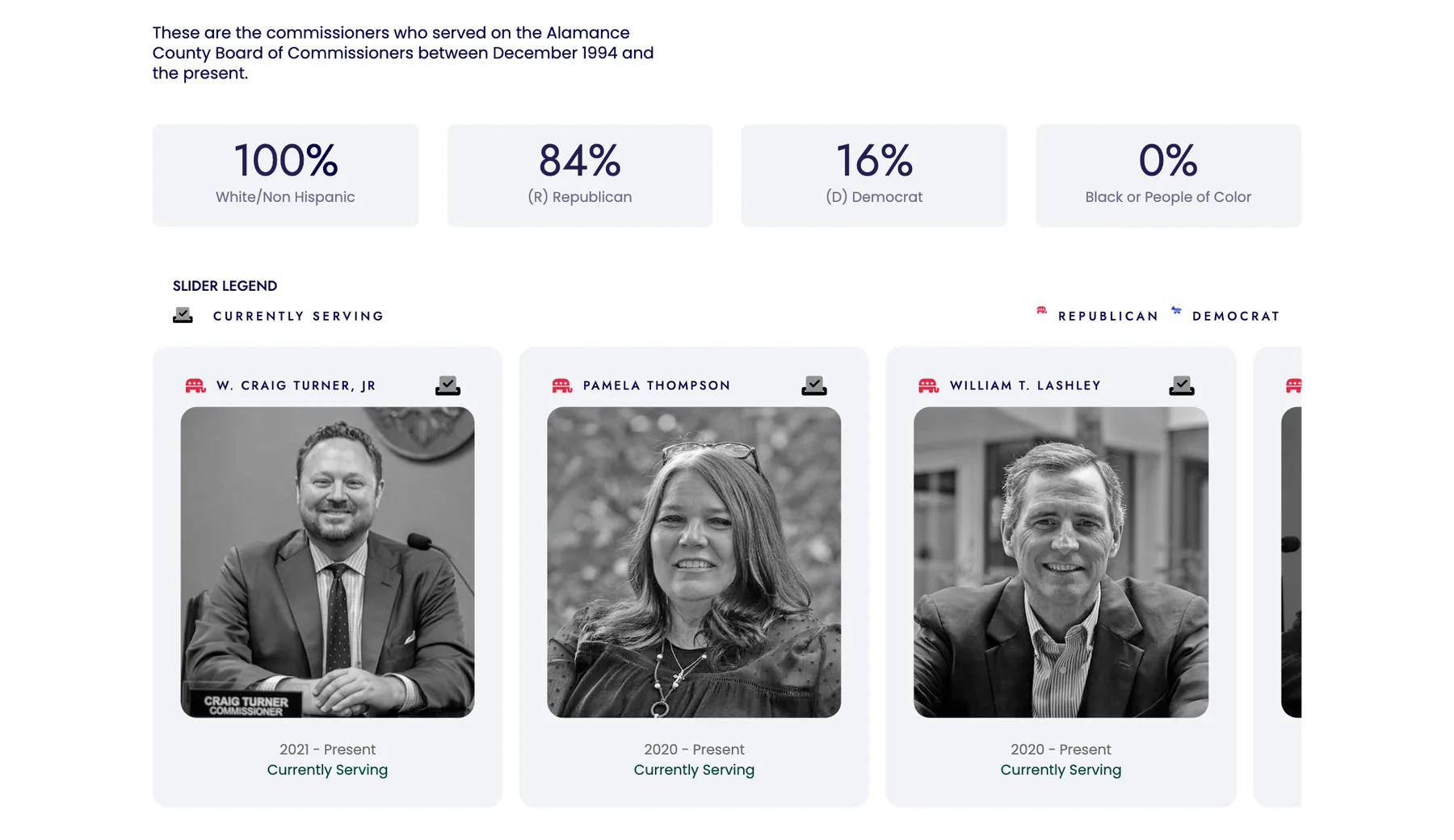
People of color make up 38% of the county and 29% of its registered voters. Every commissioner who has served since December 1994 has been white. We put that history on the homepage: a card for each commissioner with a photo, party and years served, under four numbers that do most of the arguing.
Nobody has to take AFGG’s word for it. The board’s own photos make the point.

Neighbors making the case
The argument also comes from people in the county, in their own words. “Our board of commissioners should reflect our diverse community,” says Tanya Stanford Kline, a social worker.

Answers for the curious
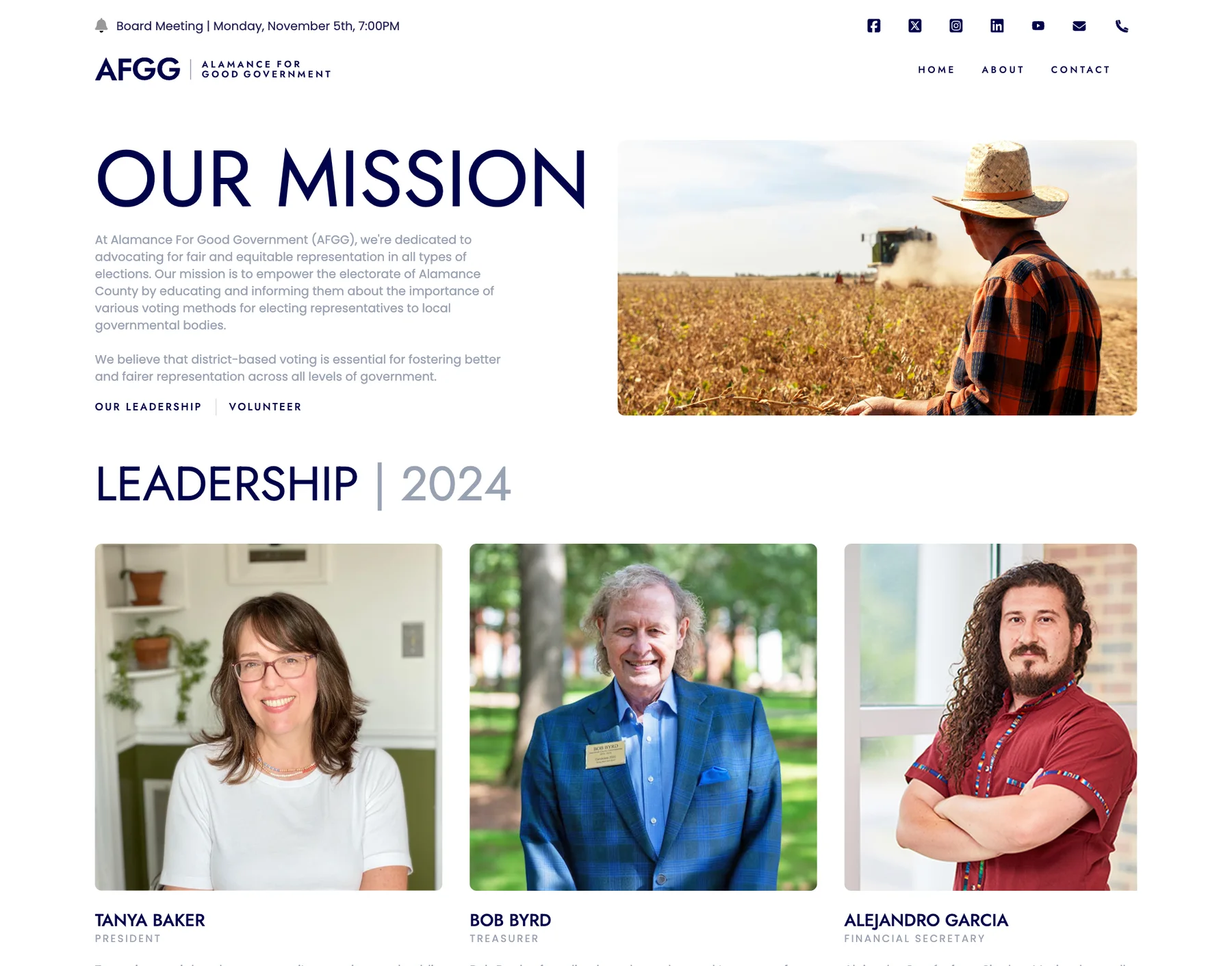
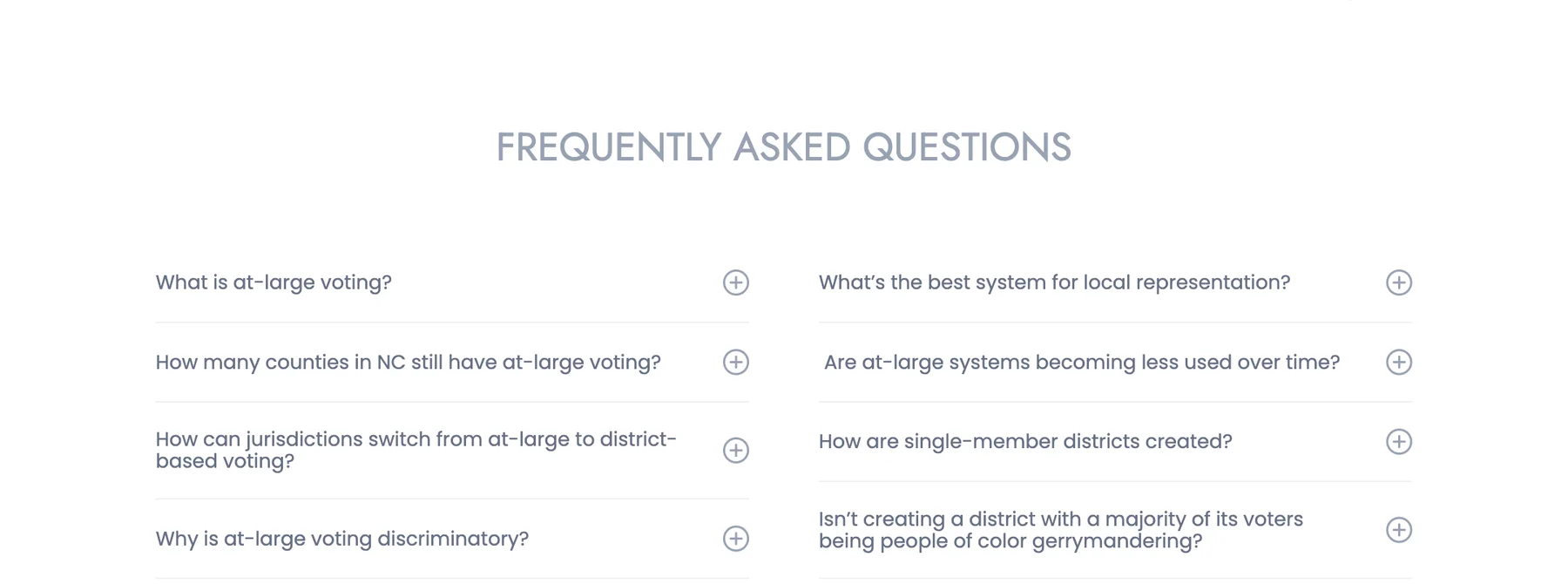
The About page introduces the board and answers the questions people ask once they get interested: what at-large voting is, why it can shut out voters of color, how a county switches to districts, and whether districts are just gerrymandering by another name.