Second time on the ballot, first woman in the office.
Two campaign websites for Beth Kennett — one for the run she lost by 176 votes, one for the run that made her Burlington’s first woman mayor.
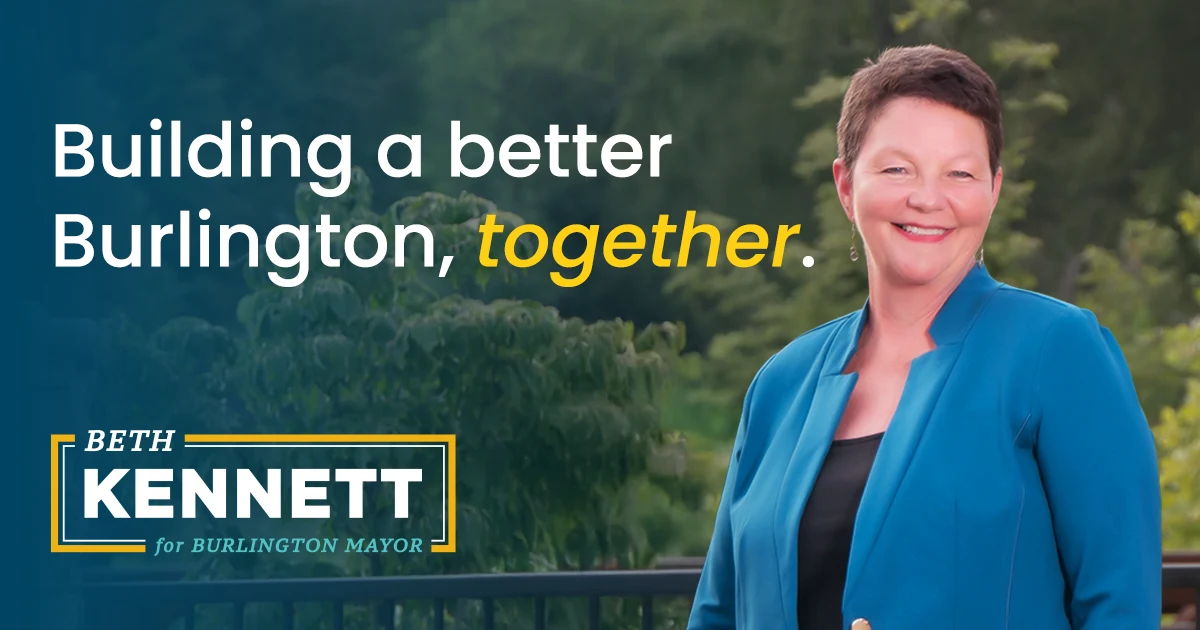
Two campaign websites for Beth Kennett — one for the run she lost by 176 votes, one for the run that made her Burlington’s first woman mayor.
A municipal campaign gets one chance to be taken seriously, and the website is usually where that judgment happens first.
Burlington sits in Alamance County, where a mayoral race is decided by a few thousand votes and most of them are cast by people who have lived in the city for decades. A candidate arriving without a recognisable name has to do two things at once: look established enough to be credible, and clearly enough not-the-incumbent to be worth changing for.
The 2023 race made the stakes plain. Beth finished 176 votes behind the incumbent — 2,884 to 3,060, a shade under three points. In a contest that close, every part of the operation is load-bearing, including whether a volunteer can find the signup form on a phone at a cookout.
Then it had to be done twice. Coming back two years later meant a site that acknowledged the first run without living in it, and a brand that had to read as continuous to the people who remembered it and fresh to the people who did not.

We built the identity and both websites end to end — logo system, palette, photography direction, copy, and the sites themselves.
The mark is a plain wordmark in a rule box: her name, the office, nothing else. Campaign design drifts toward flags, eagles and italics, and all of it reads as generic at a glance. A candidate nobody has met yet is better served by looking like a person than like a party. It had to hold at every size the campaign would actually use it — a card handed over at a door, a yard sign read from a moving car, a profile photo two centimetres wide.
Every page is built around one action. The homepage leads with the family photograph and a single donate button. The vision page gives each issue its own heading so a voter can find the one they care about without reading a platform. Endorsements sit on their own page because in a municipal race the list of local names is the argument.
Both sites were built to be run by the campaign, not by us. Volunteers added endorsements as they came in through the autumn, which in a race this size is the difference between a page that is current in October and one that is not.
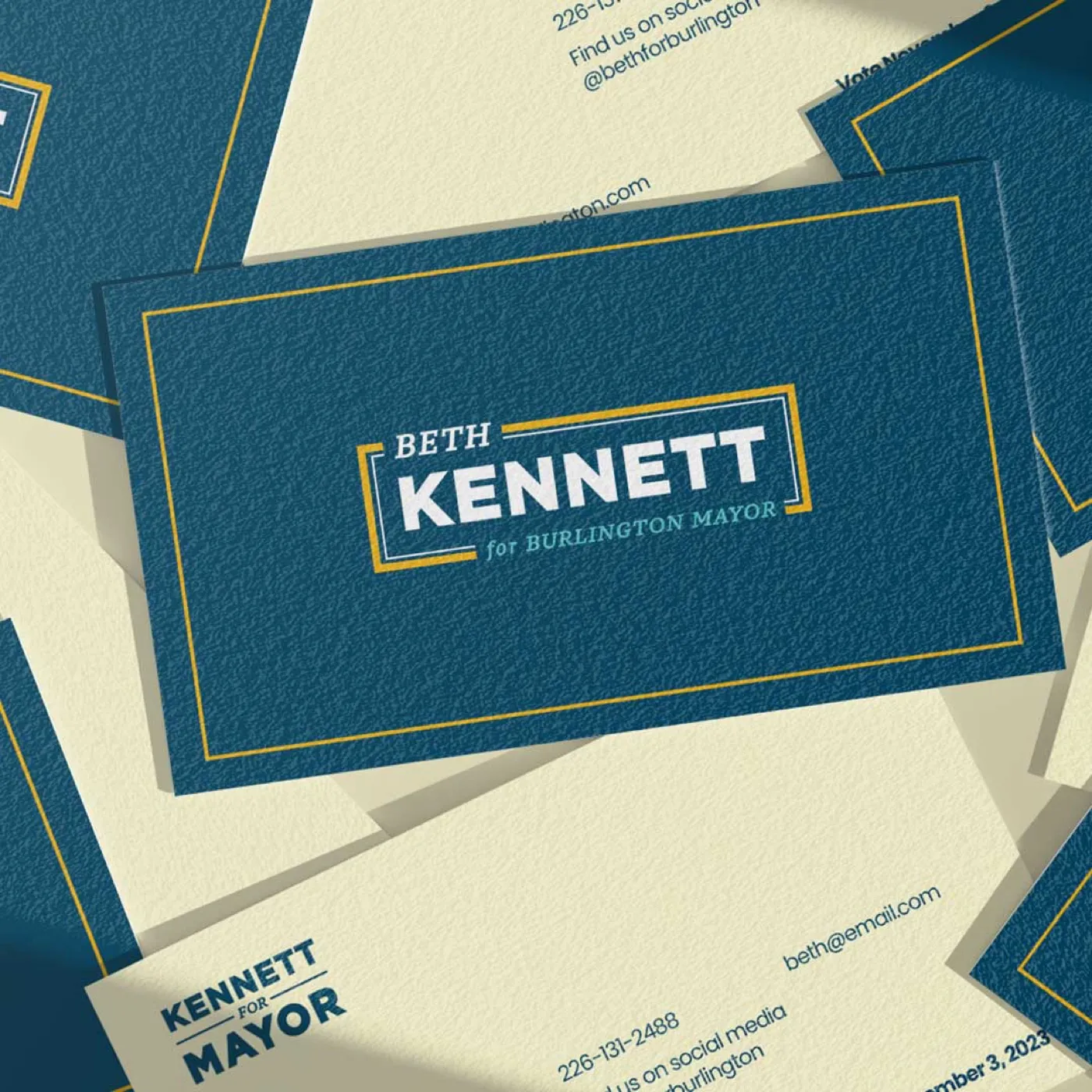
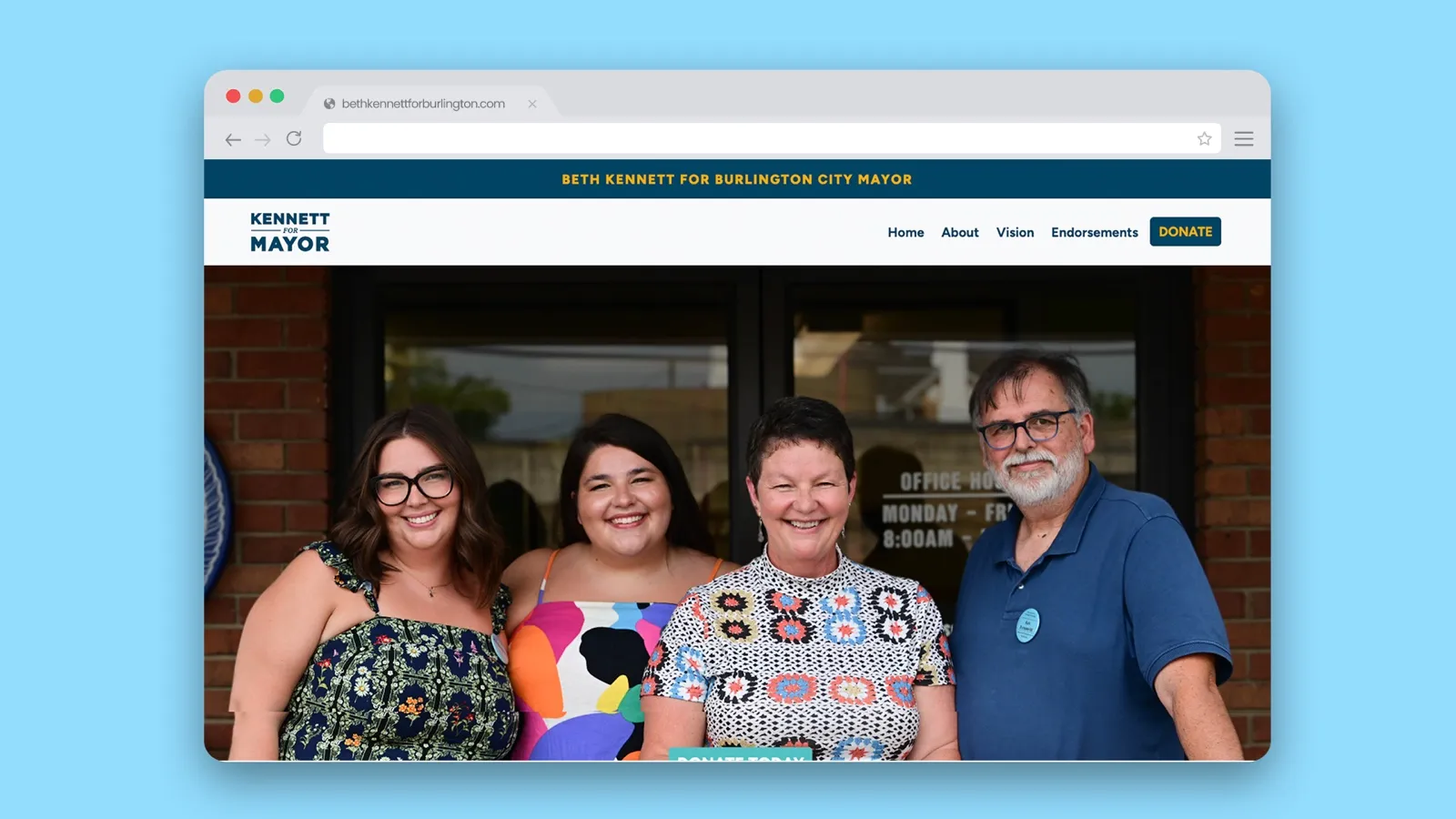
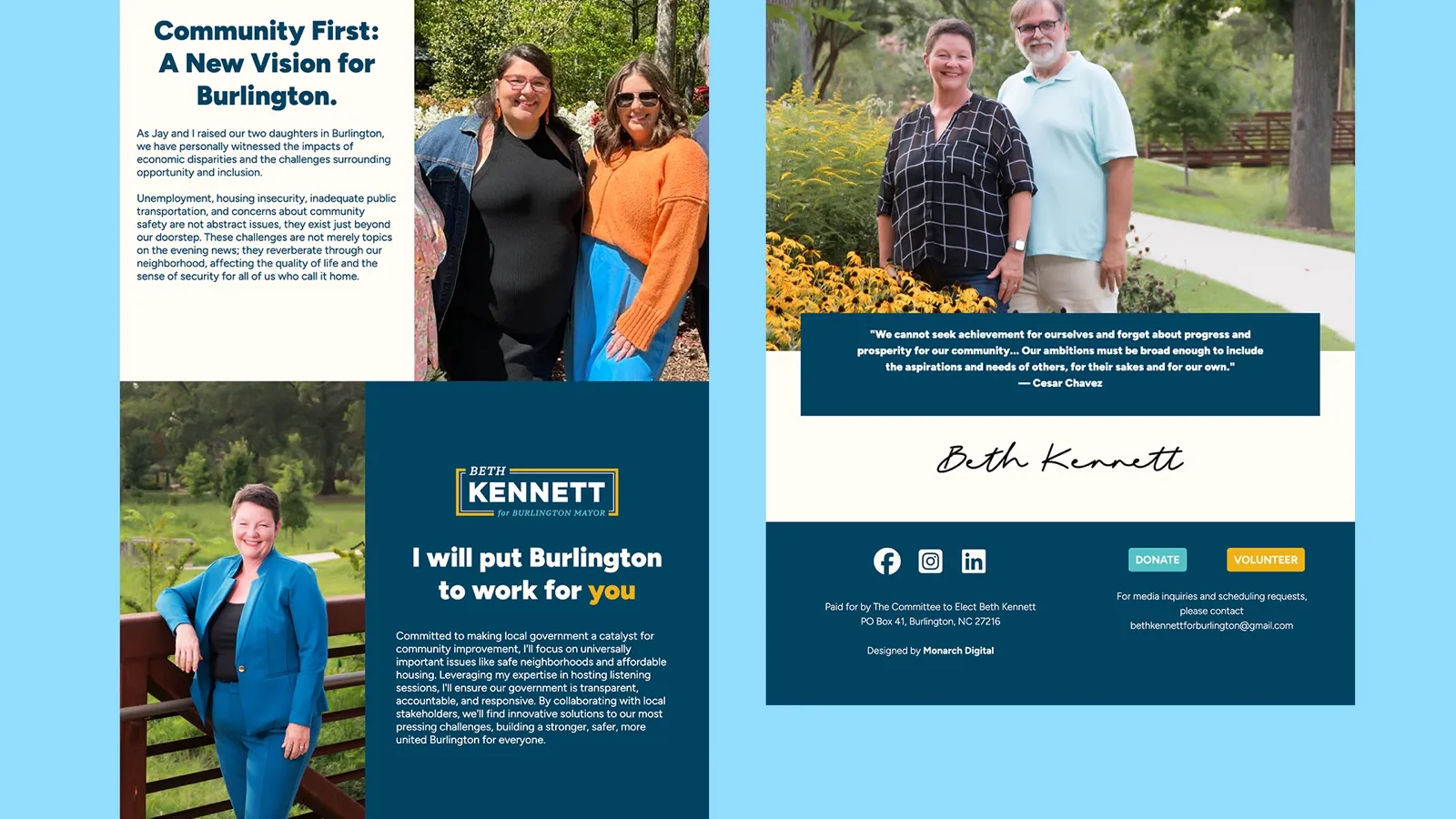
On 4 November 2025, Beth Kennett was elected mayor of Burlington with 4,237 votes to 3,640 — the first woman to hold the office in the city’s history.
The swing is the part worth reading twice. Her own vote went from 2,884 to 4,237, a gain of just under half again, in a municipal election two years apart. A 176-vote deficit became a 597-vote win.
A website does not win an election. Volunteers, doors and a candidate people trusted won it. What the site had to do was never be the reason someone hesitated — and across two campaigns, it was not.