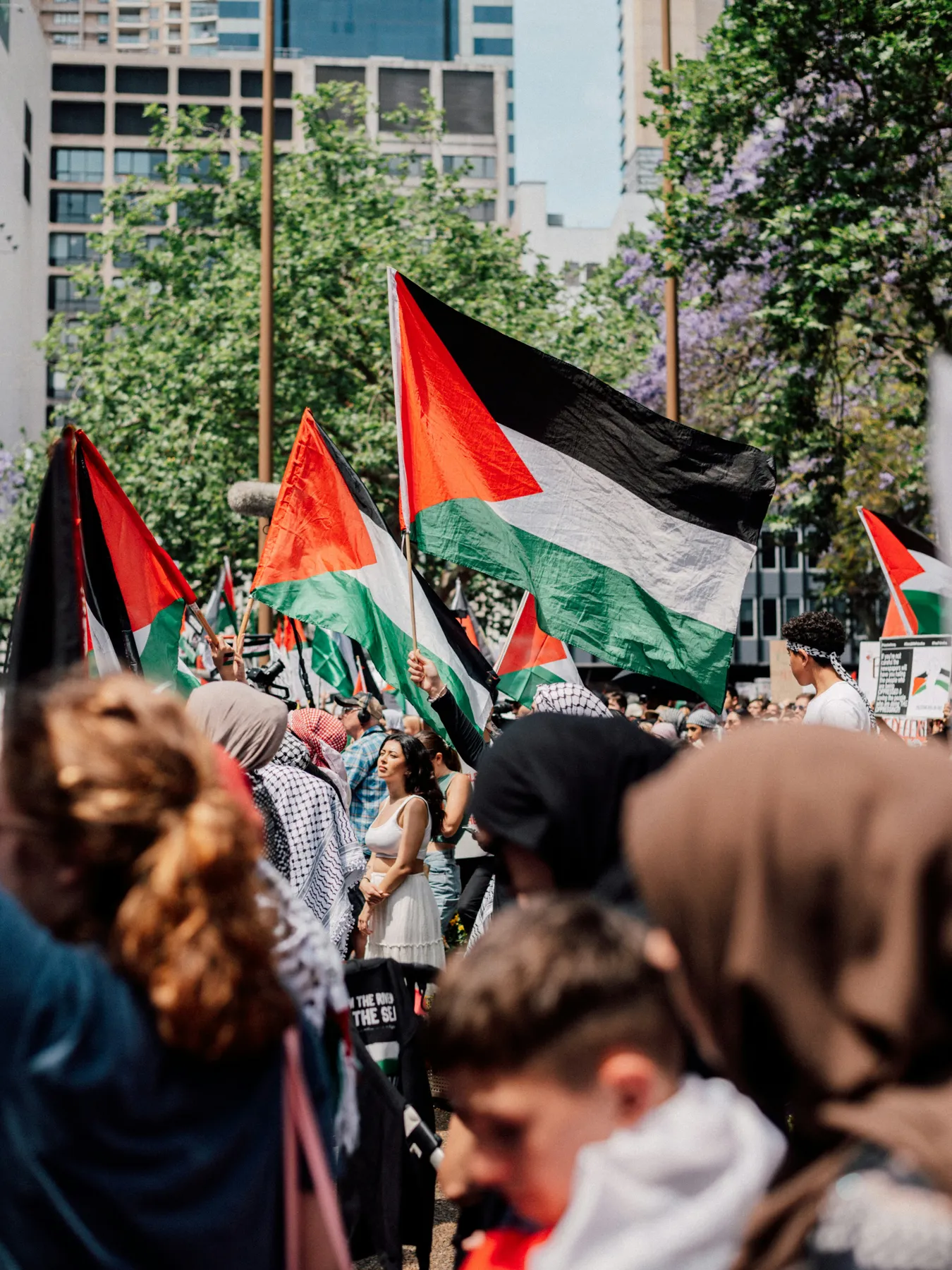
A playbook for narrating with dignity.
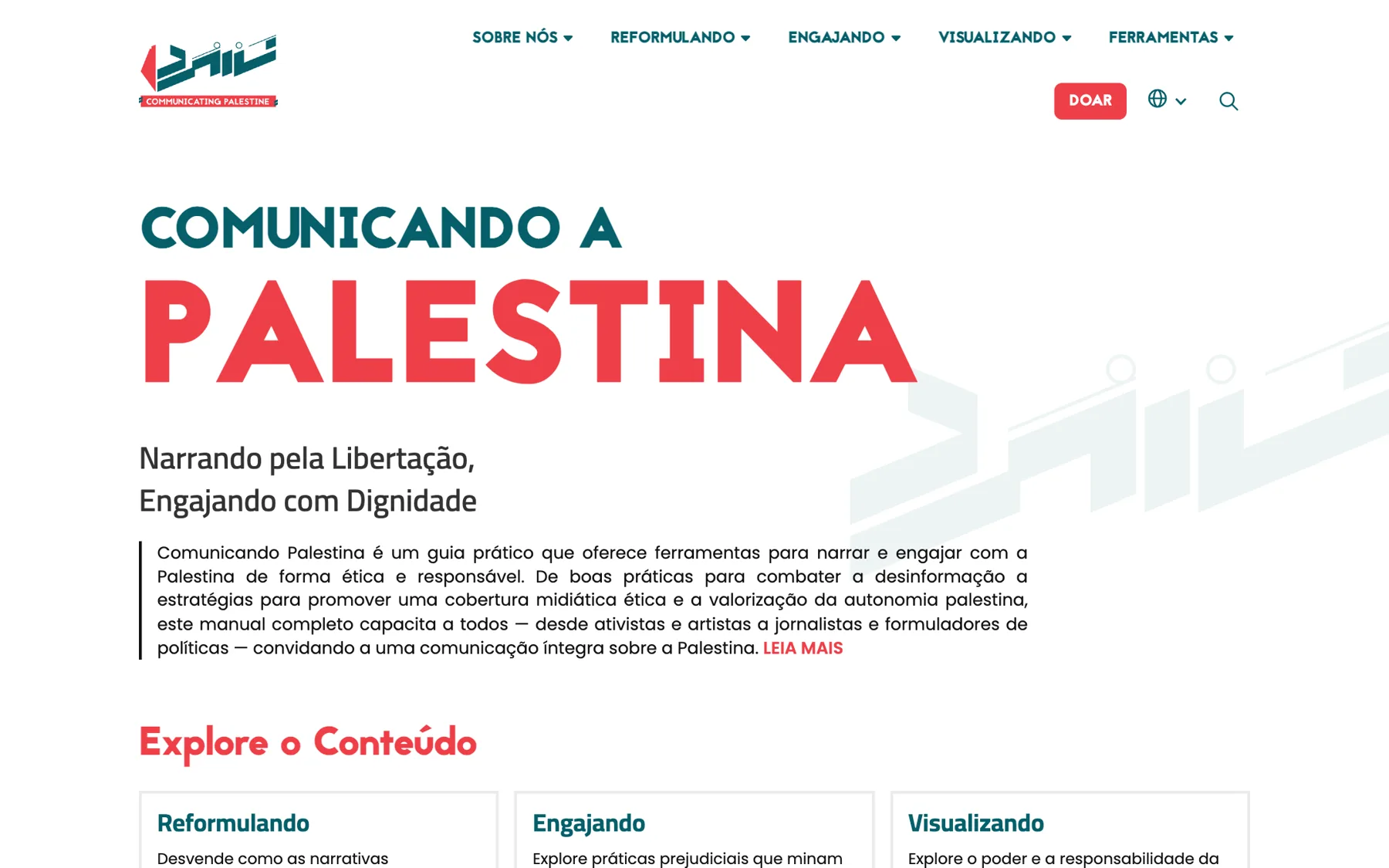
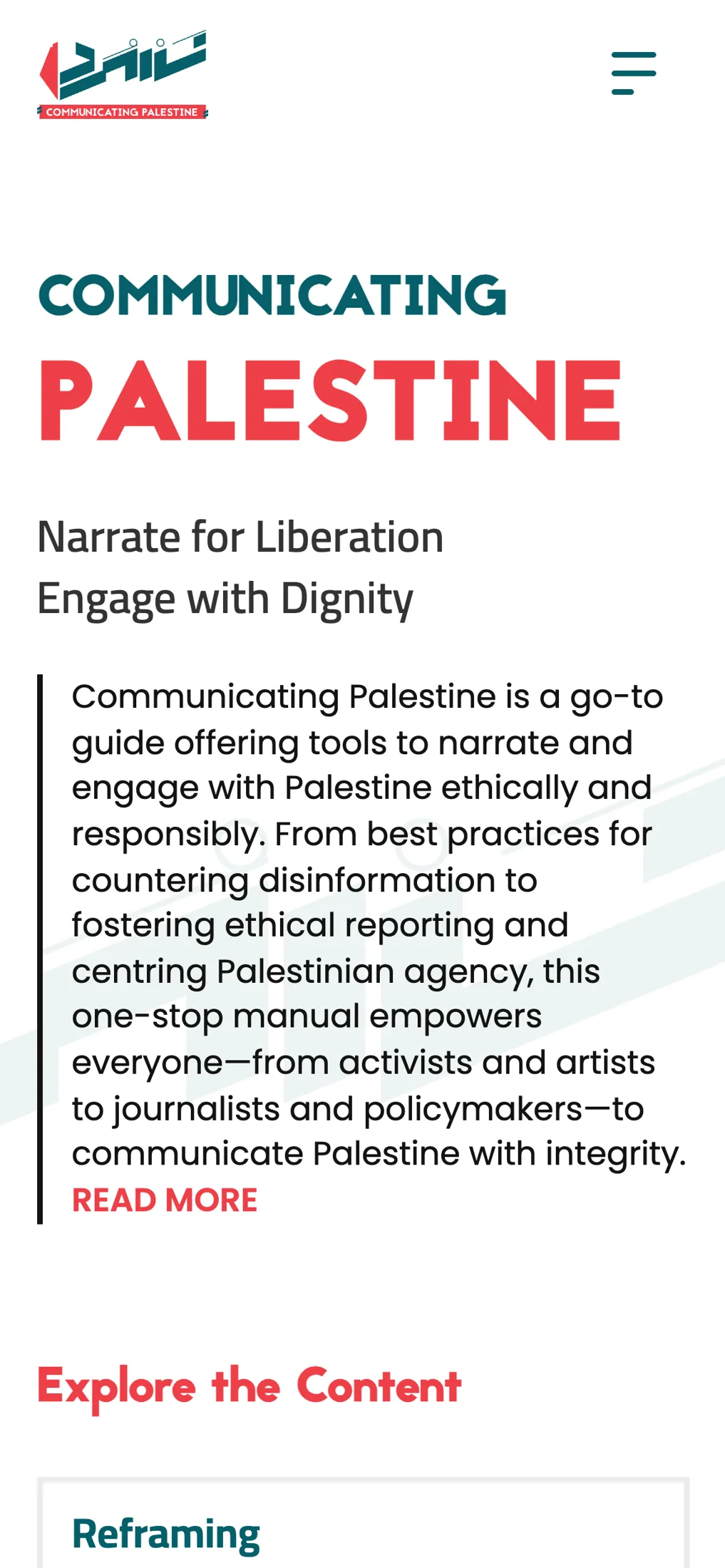
Communicating Palestine is the Palestine Institute for Public Diplomacy’s practical guide to narrating Palestine with dignity. We designed and built it in English and Portuguese.
Visit communicatingpalestine.orgTurning a guide nobody finishes into a tool people use.
PIPD had detailed guidance to share: how to frame stories, which terms to use and how to choose photographs responsibly. Guidance like this usually ships as a long PDF that gets downloaded once and never opened again.
This had to work as a reference that journalists, advocates, academics and policymakers come back to on deadline. It also had to read as careful and well sourced, because guidance on how to talk about Palestine is read skeptically by design.
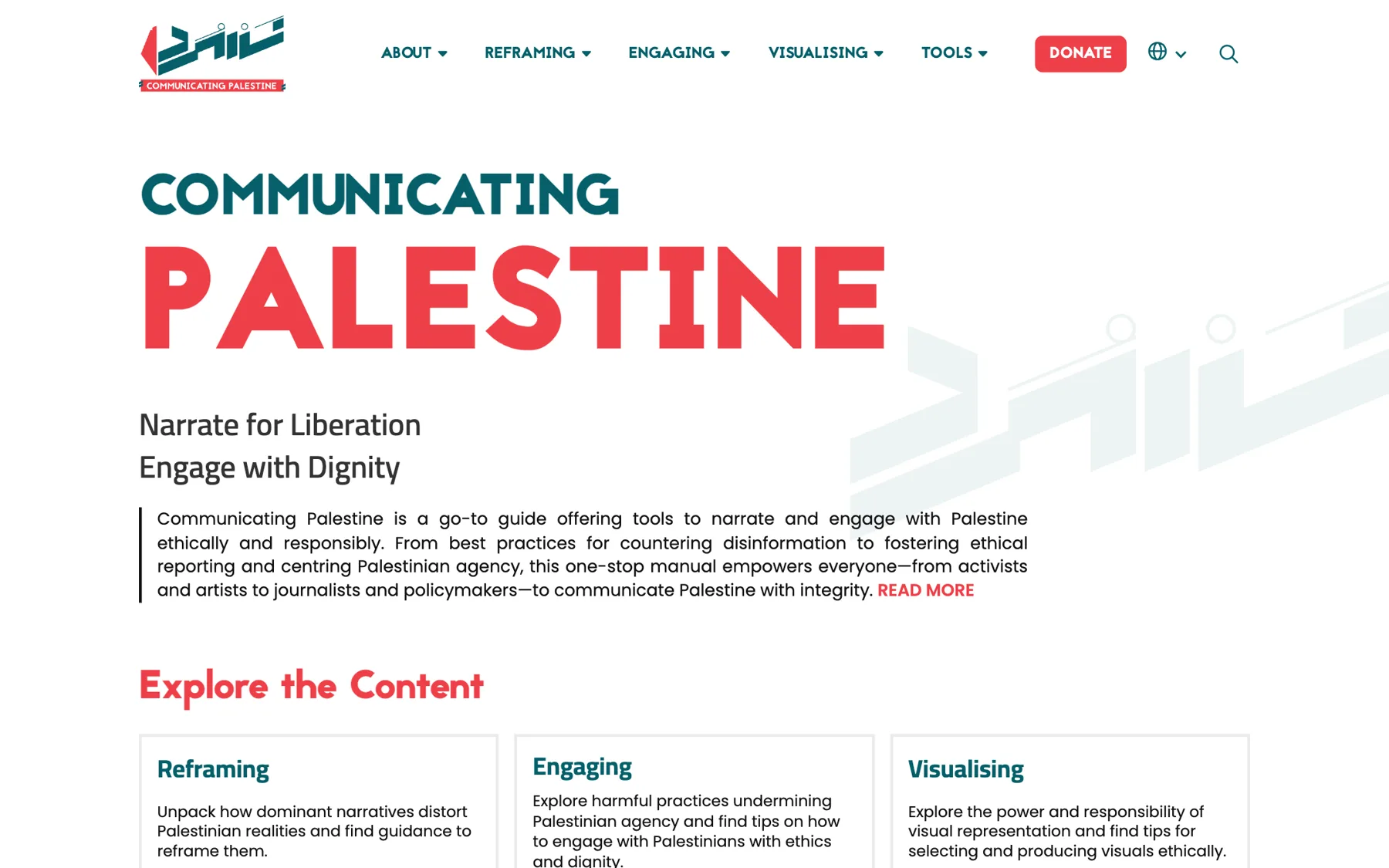
A guide organized for how people use it
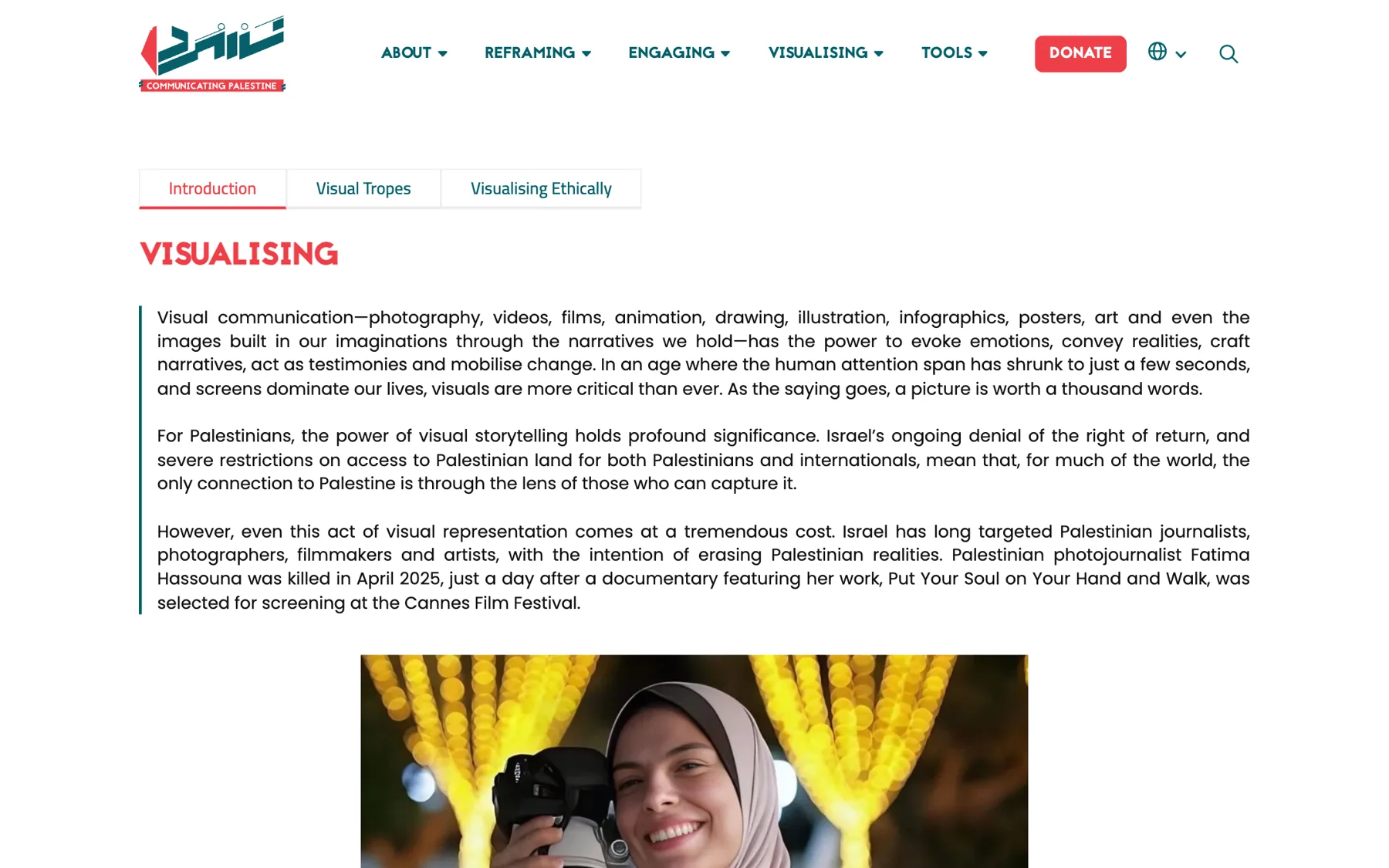
We organized the guide into four areas: Reframing, Engaging, Visualising and Tools. Then we built a separate path through them for each of six audiences, because a newsroom editor and a policy adviser don’t need the same chapters in the same order.
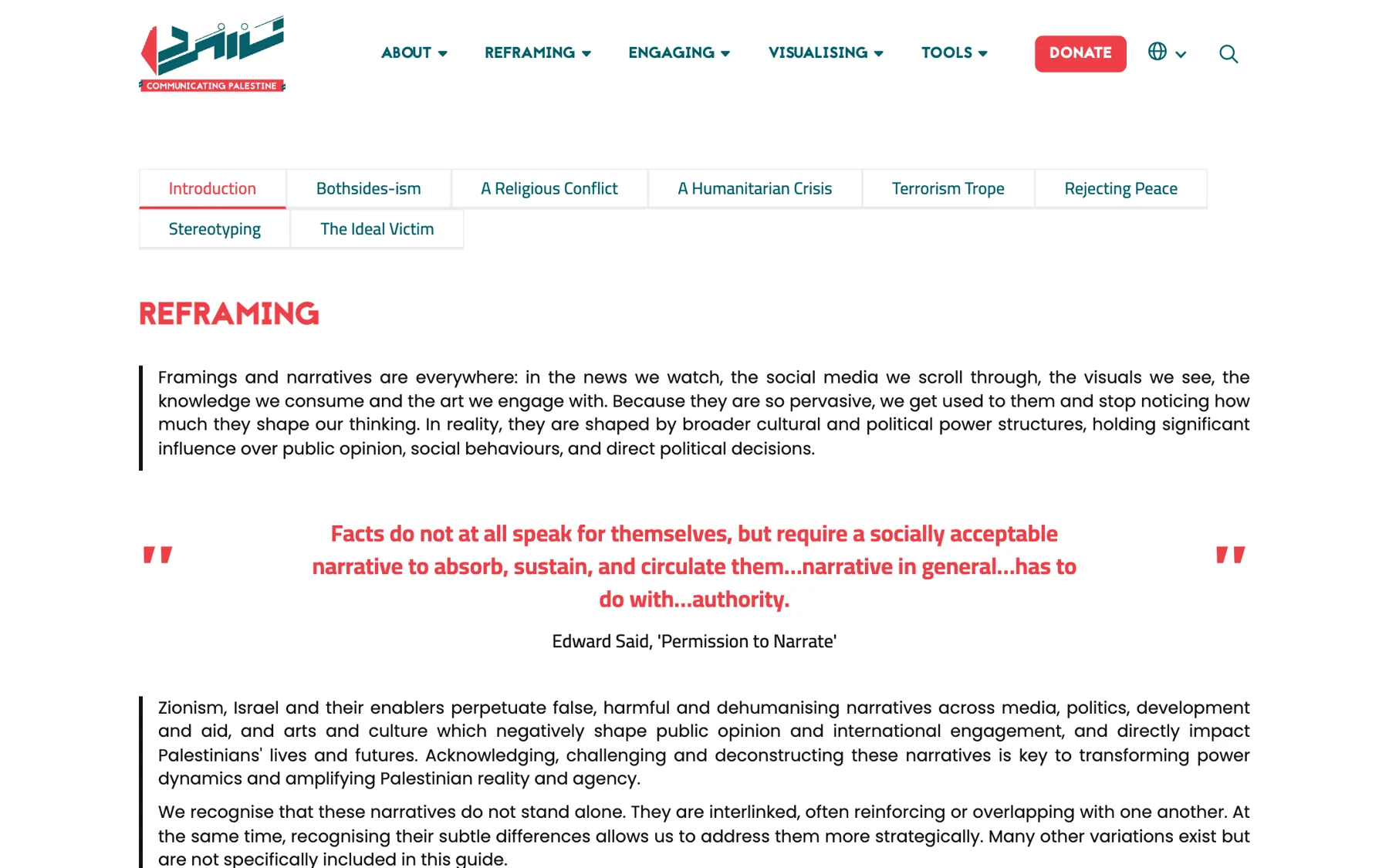
Tools instead of downloads
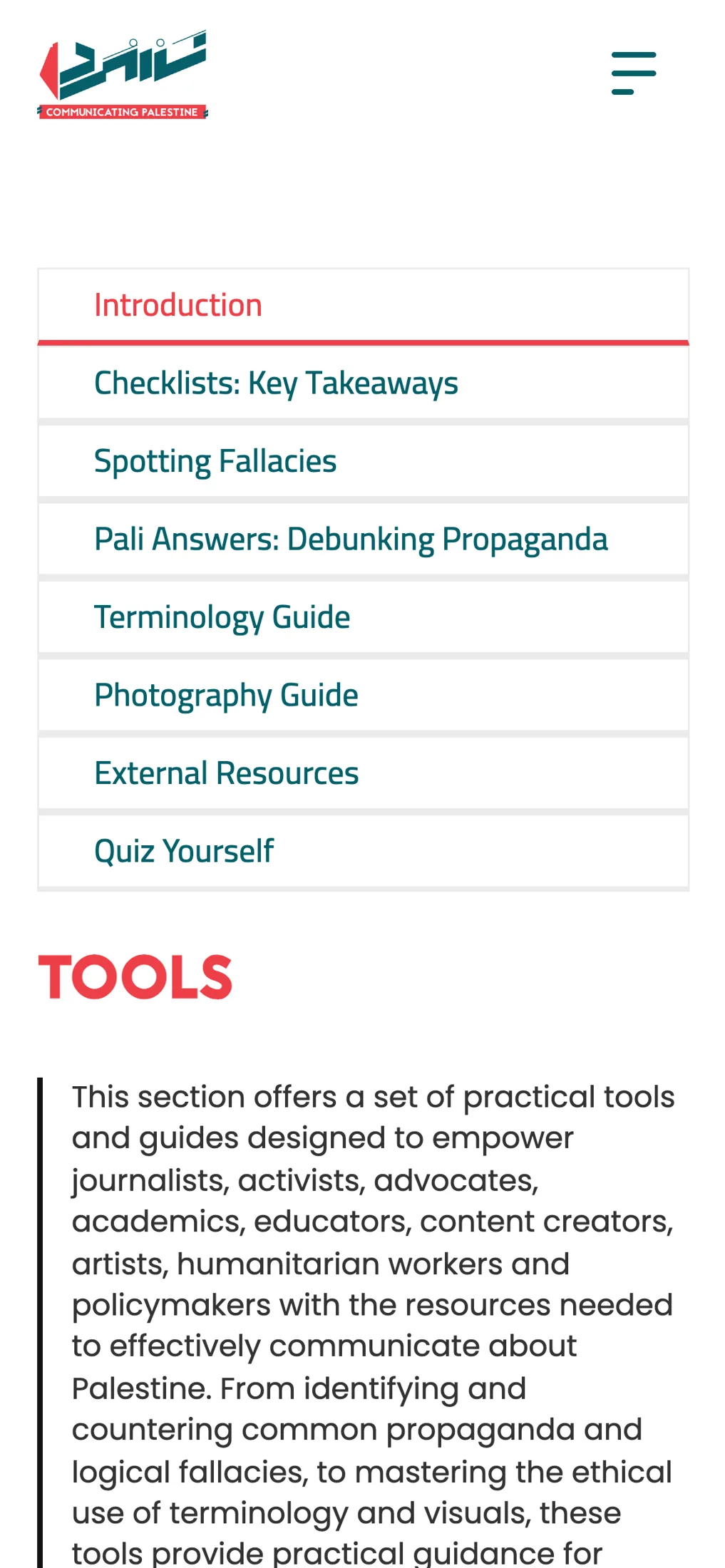
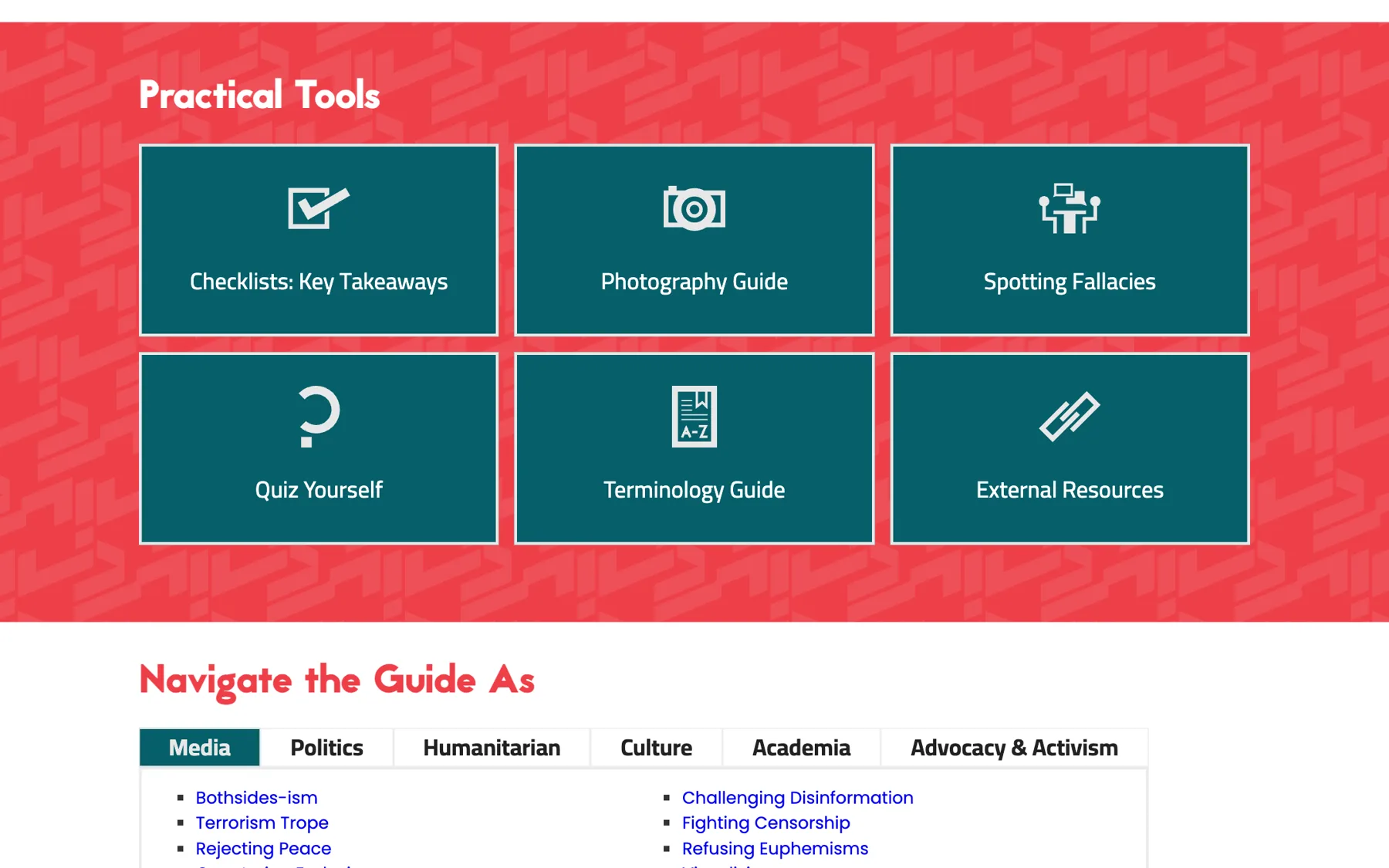
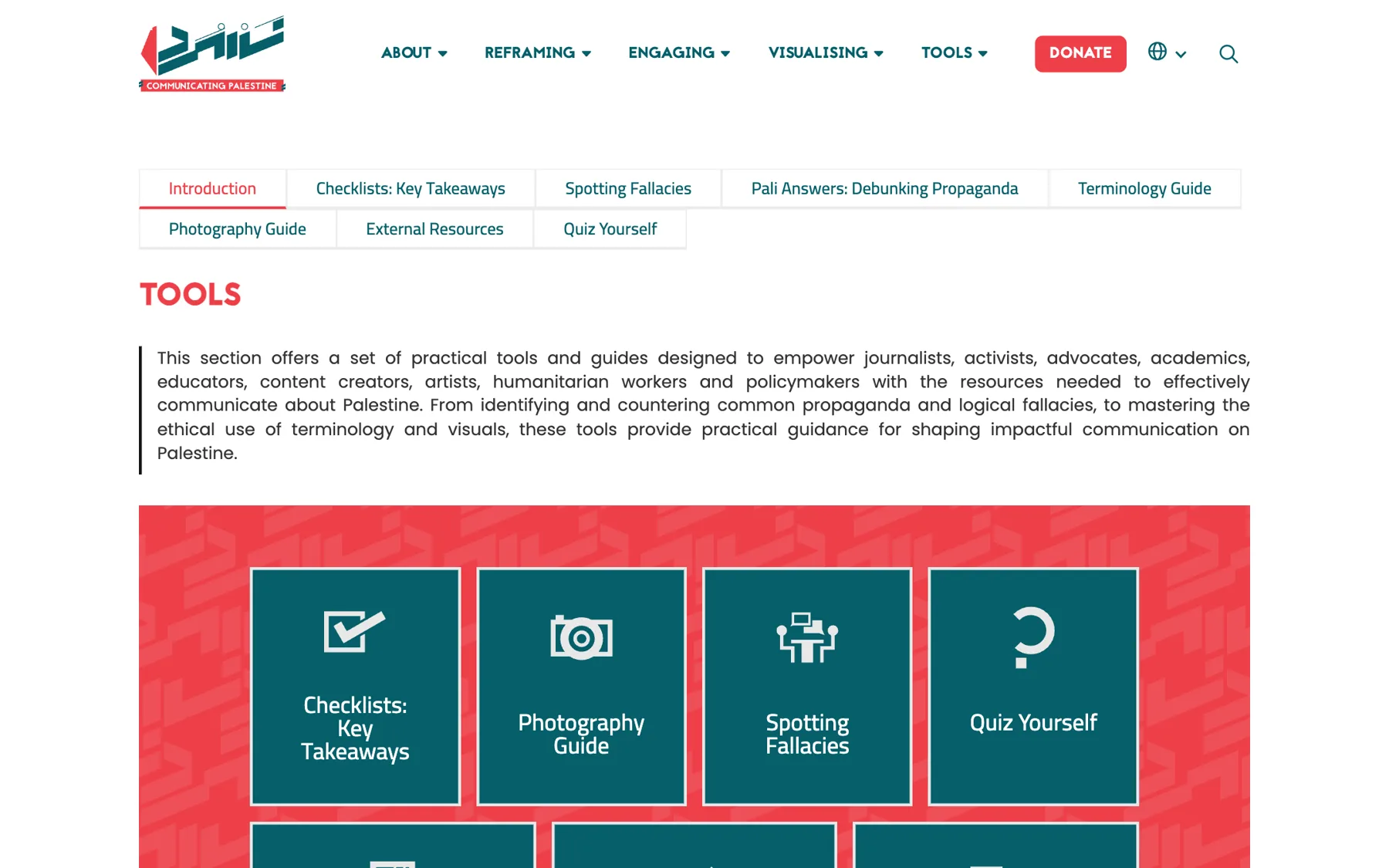
The guidance became pages rather than files. Checklists, a terminology guide, a photography guide and self-quizzes all live on the site, so they can be used in the field instead of filed away after one read.
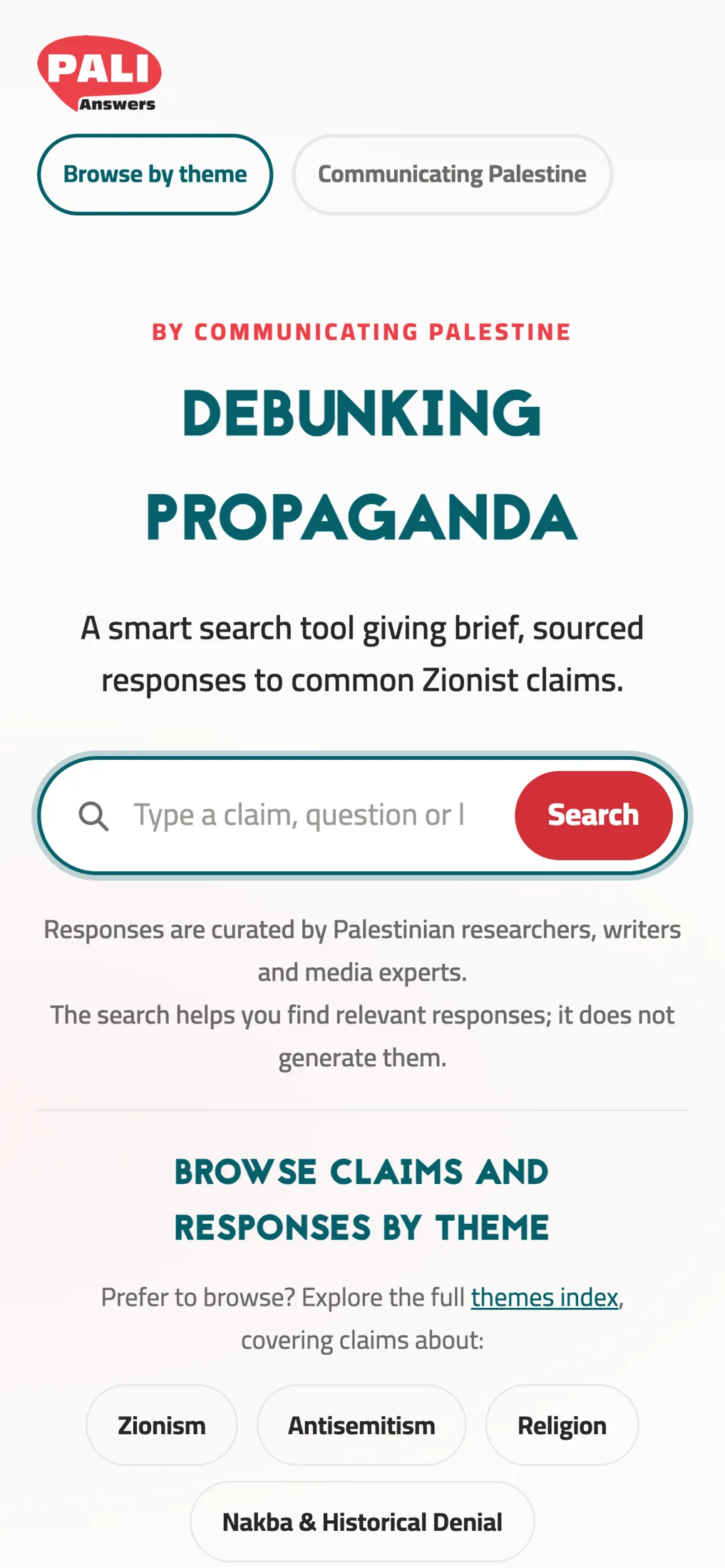
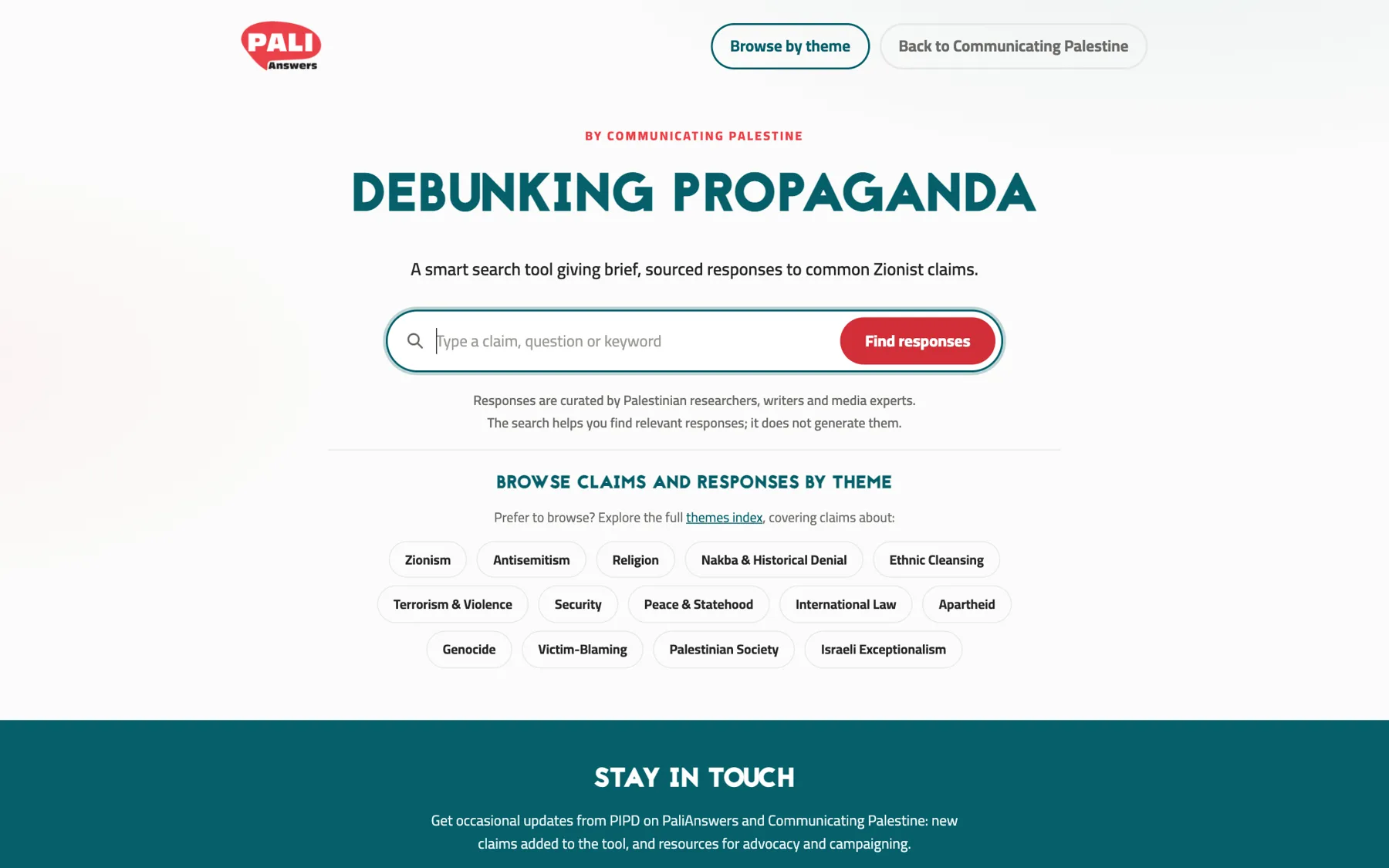
When PIPD launched PaliAnswers, a tool for answering propaganda claims with brief, sourced talking points, we built its entry point into the guide and added a site search so readers can find anything quickly.
In English and Portuguese
The whole guide is available in Portuguese as well as English, written to read naturally in each.